
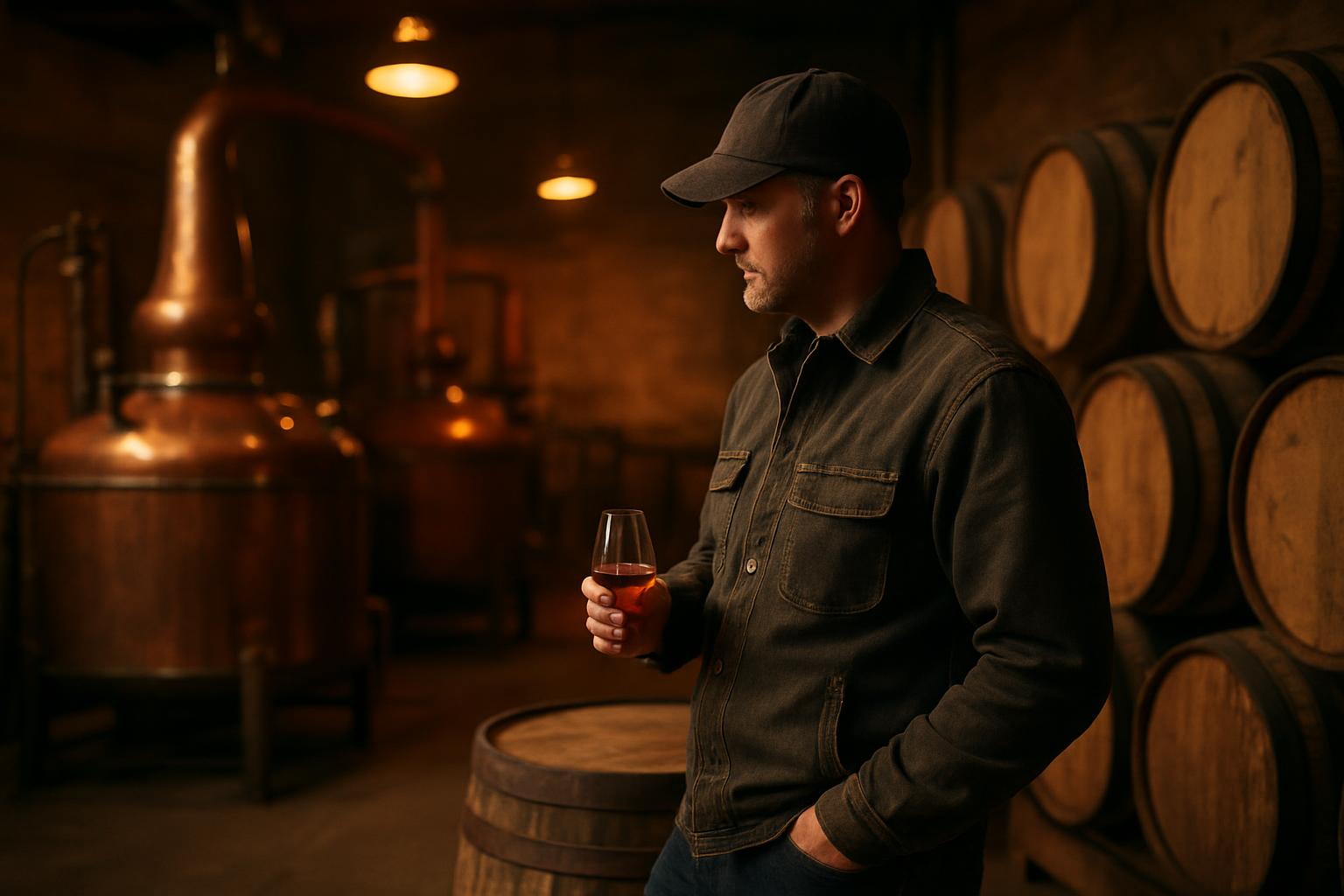
Naming a Texas Whiskey Without Faking Scotland
A tourist picks up your bottle in a shop, sees a name that sounds like it belongs beside a peat bog, turns the label, and finds out the whiskey is distilled in Texas. That moment is small, but it matters. The buyer may still like the liquid. The problem is that the name has already asked for a kind of trust it did not earn.
Whiskey buyers are used to stories. Grain, water, barrels, climate, family, place, patience. A name can carry that story before anyone reads a back label. But when a non-Scottish distillery leans on Glen, Loch, Mac, Ben, Thistle, Highland, or tartan-heavy cues, the story starts to look borrowed. Worse, it can make the actual place behind the spirit feel like something to hide.
Your whiskey brand name is making a promise
A spirits name is not just a vibe. It is a signal. In whiskey, geography has legal, cultural, and emotional weight. Scotch means something specific. Bourbon means something specific. Texas whiskey, Irish whiskey, Japanese whisky, Tennessee whiskey, and single malt all carry expectations before taste enters the conversation.
That does not mean every name must be literal. A Texas whiskey does not need to be called Austin Barrel No. 4. But if the name sounds like a Highland estate and the product has no Scottish origin, no Scottish founder, and no meaningful Scottish method, customers may read the choice as camouflage.
The issue is not that founders admire Scotch. Plenty of distillers do. The issue is when admiration turns into costume. A brand name that borrows another region's cultural shorthand can create the impression that the real origin story is not strong enough.
Geographic honesty beats borrowed mist
Texas gives a whiskey brand plenty to work with. Heat aging. Wide temperature swings. Oak extraction. Mesquite smoke, limestone water, dry air, cattle country, borderlands, Gulf humidity, German and Czech immigrant histories, oil towns, Hill Country, Panhandle wind. Those cues are not generic. They are specific, visual, and defensible.
A name like Iron Mesa, Llano Cask, Red River Still, Juniper Draw, or Broken Spur may not fit every positioning, but each points toward a world that can actually belong to the bottle. That matters on a crowded shelf. Specificity feels more confident than imitation.
Geographic honesty also creates room for surprise. A Texas single malt can proudly say, yes, this is made with malted barley, but it ages under a different sun. That is more interesting than pretending the bottle drifted down from the Highlands with a cowboy hat added later.
Trademark problems hide in fake provenance
Faux-geographic naming can also create legal friction. Spirits are full of protected terms, certification rules, and trademark owners who pay attention. You may avoid the word Scotch and still create a name, label, or presentation that suggests protected origin. Regulators and competitors care about misleading geographic indications.
There is also the ordinary trademark problem. Words like Glen, Highland, Barrel, Oak, Reserve, and Still are crowded. Combining a Scottish cue with a whiskey term often lands a founder in a packed field of similar marks. Even if a name is technically registrable, it may be weak, hard to defend, and expensive to clear.
Before falling in love with a name, search beyond exact matches. Look for similar sounds, similar meanings, plural forms, spacing changes, and related alcohol categories. A whiskey name can run into trouble with a rum, gin, beer, or ready-to-drink cocktail brand if the overlap is close enough.
Domain names still need shelf logic
The available domain should not drive the entire name, but it can expose weak thinking fast. If the only affordable domain requires adding distillingco, whiskeyofficial, drink, or three extra words, the name may already be too crowded. That does not kill it, but it changes the cost of building recognition.
For spirits, the domain also has to survive being said out loud at tastings, printed on a neck tag, typed from a bottle photo, and found after a bartender recommends it. Clever spelling can look distinctive in a pitch deck and fail in a noisy bar.
This is where a practical naming check helps. Namedrop can be useful once you have a direction, because it pairs name ideas with domain pricing, X and TikTok handle checks, USPTO conflict status, and a pre-filled EUIPO search link. It will not decide the ethics of the name for you, but it can shorten the clearance stage.
A naming strategy for regional spirits
Start with the truth you want the bottle to carry. Is the whiskey about heat-aged intensity, local grain, a historic town, a founder's craft background, a ranch landscape, a specific still type, or a bolder drinking occasion? Pick the real anchor first. Style comes second.
Then pressure-test the name with three blunt questions:
- Would a buyer feel misled after reading the back label?
- Could the same name sit honestly on a bottle ten years from now?
- Does the name make the actual place of production feel stronger, not smaller?
If the answer is shaky, the name is probably leaning on borrowed equity. That may help someone notice the bottle once. It will not build the kind of recognition that survives repeat purchases, distributor meetings, awards, and expansion into new markets.
The best regional spirit names do not apologize for where they come from. They make place feel like an advantage. If the whiskey is distilled in Texas, the name should have the nerve to stand in that heat.
Ready to name your business?
10 AI-generated names with domain availability, social handle checks, and USPTO trademark status. One-time $9.
Name my business →