
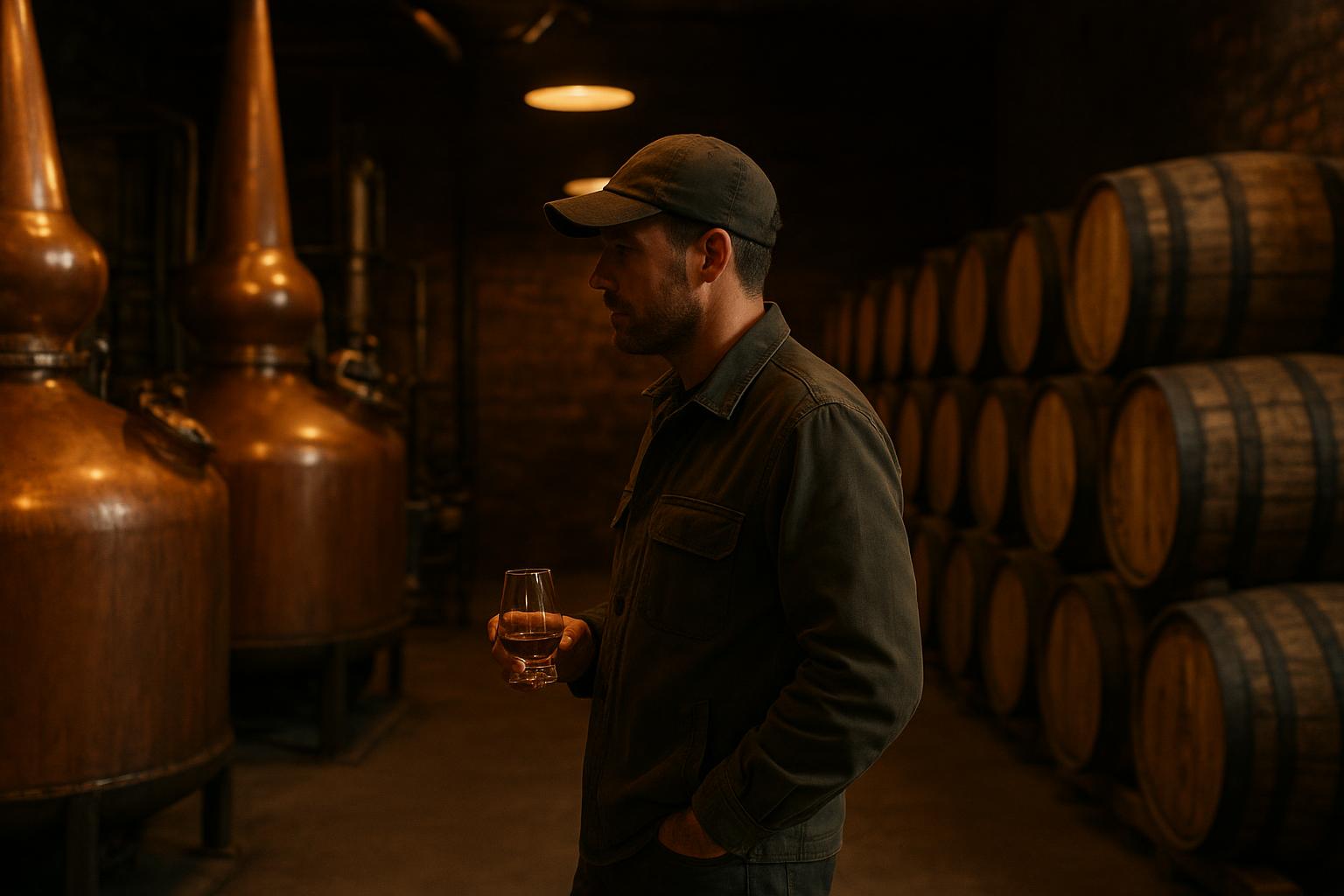
When Your Texas Whiskey Sounds Scottish
A customer picks up your bottle, sees a name like Glen Tarrant, Highland Spur, or McAllister Reserve, and assumes a Scottish story is coming. Then the back label says distilled in Waco, aged outside Austin, bottled in Fort Worth. That moment matters. The liquid might be excellent, but the name has already made the customer feel like something was hidden.
Whiskey buyers tolerate romance. They expect some theater. Barrels, weather, water, grain, family myths, old buildings, lucky accidents, all of it belongs to the category. What they do not forgive easily is geographic cosplay. If the name points to Scotland and the product is proudly Texan, the brand has forced buyers to reconcile two stories before they even taste it.
Why a whiskey brand name creates expectations
Names carry shortcuts. In whiskey, those shortcuts are unusually strong because place is tied to method, regulation, and flavor expectation. Say Islay, and people think peat smoke and sea air. Say Kentucky, and they think bourbon, corn, charred oak, and rickhouses. Say Texas, and they increasingly think heat-driven aging, bold oak extraction, grain character, dry air, and regional attitude.
A Scottish-sounding name is not neutral decoration. Words like glen, loch, ben, strath, highland, isle, and certain Mac or Mc constructions do a job. They suggest origin, lineage, and category. Even if the label never says “Scotch,” the signal is still there. A founder may see it as classy. A buyer may see it as evasive.
The problem gets worse as the brand grows. In a local tasting room, staff can explain the story in thirty seconds. On a retail shelf in another state, the bottle has to explain itself alone. Online, a Reddit thread or whiskey forum can reduce the whole brand to “fake Scottish Texas whiskey” before the first review even reaches the finish notes.
Geographic honesty is not the same as boring naming
Being honest about place does not mean naming every bottle “Austin Small Batch No. 1.” It means the core signal of the name should not fight the truth of production. Texas gives a distillery plenty to work with: limestone, live oak, cedar, mesquite, blackland prairie, Hill Country, Gulf humidity, panhandle wind, desert heat, ranch roads, rail towns, oil towns, riverbeds, old dance halls, and brutal warehouse summers.
The strongest regional names often do not shout the place. They imply it through texture. Balcones works because it draws from a real Texas geological and cultural reference. Garrison Brothers sounds rooted without pretending to be Scottish. Ironroot Republic feels local, industrial, and agricultural at the same time. These names create a world that matches the bottle.
If your whiskey is made in Texas, let Texas be an asset instead of an inconvenience. The category no longer needs a borrowed Highland costume to be taken seriously.
The trademark problem with faux-heritage names
Misleading geography is not only a trust problem. It can become a trademark and labeling problem. Spirits naming sits near several regulated zones: protected geographic indications, alcohol labeling rules, and ordinary trademark law. Scotch whisky is a protected term, and regulators care when branding creates confusion about origin. Even if a name avoids explicit protected words, the overall commercial impression can still be questioned.
Then there is the crowded field issue. Faux-Scottish naming has been mined for decades. Add a glen, a stag, a stone, a crest, or a tartan reference, and the name may look distinct to you while looking generic to a trademark examiner or too close to another spirits brand. The more you lean on category clichés, the harder it is to own the name.
This is where early screening matters. Before getting attached, check exact matches, similar marks, phonetic neighbors, and related alcohol classes. A tool like Namedrop can help generate name directions while showing domain options, social handle checks, and an automatic USPTO conflict status, but it should sit alongside a sober review of what the name is actually implying.
How to name a Texas whiskey without sounding fake
Start with the truth you can defend in a bar, on a label, and in a trademark filing. If the whiskey is grain-to-glass, that is a naming route. If the aging environment is extreme, that is a route. If the water source, mash bill, town, founder background, or building has substance, use that. If the only reason for a Scottish name is that whiskey “feels Scottish,” keep digging.
Useful naming territories for non-Scottish distilleries include:
- Climate names, built around heat, dust, storms, drought, sun, or seasonal swings.
- Material names, based on oak, limestone, copper, grain, smoke, iron, or stone.
- Local geography, using rivers, roads, ridges, plains, counties, or historic place references.
- Founder or house names, if the surname or story has enough character and legal clearance.
- Process names, tied to fermentation, barrel entry proof, maturation, blending, or still design.
The test is simple. If a stranger asks, “Why is it called that?” the answer should make the bottle more credible, not less.
Domain choices for a spirits brand name
Domain availability can tempt founders into bad names. The exact .com for a straightforward Texas whiskey name may be expensive or taken, while a strange pseudo-Scottish name is available for $12. That does not make it a better brand. It may only mean nobody else wanted to carry that baggage.
For spirits, an exact .com is helpful, but not always required at launch. A clean modifier can work: drink, distilling, whiskey, spirits, or the distillery location. Social handles matter too, because whiskey discovery often happens through tastings, bottle shots, bartenders, and collectors. The key is consistency. A name that needs three different spellings across label, domain, and Instagram will leak attention.
Also consider pronunciation. If the name borrows Gaelic-looking spelling, bartenders may stumble, retailers may misspell it, and customers may avoid saying it out loud. A difficult name can work when it is authentic and memorable. It fails when it is difficult only because it is pretending.
The brand name has to survive the truth
The best test for a whiskey name is not whether it looks elegant on a label mockup. It is whether the name still feels right after the customer learns every practical fact: where the grain came from, where the mash was fermented, where the spirit was distilled, where it was aged, and who actually owns the brand.
If the name gets weaker as facts appear, the name is a liability. If it gets stronger, it can carry the brand for years. A Texas whiskey does not need to apologize for being Texan, and it does not need to borrow misty hills to earn respect. The bottle should invite curiosity, then reward it with a story that holds up.
Ready to name your business?
10 AI-generated names with domain availability, social handle checks, and USPTO trademark status. One-time $9.
Name my business →