
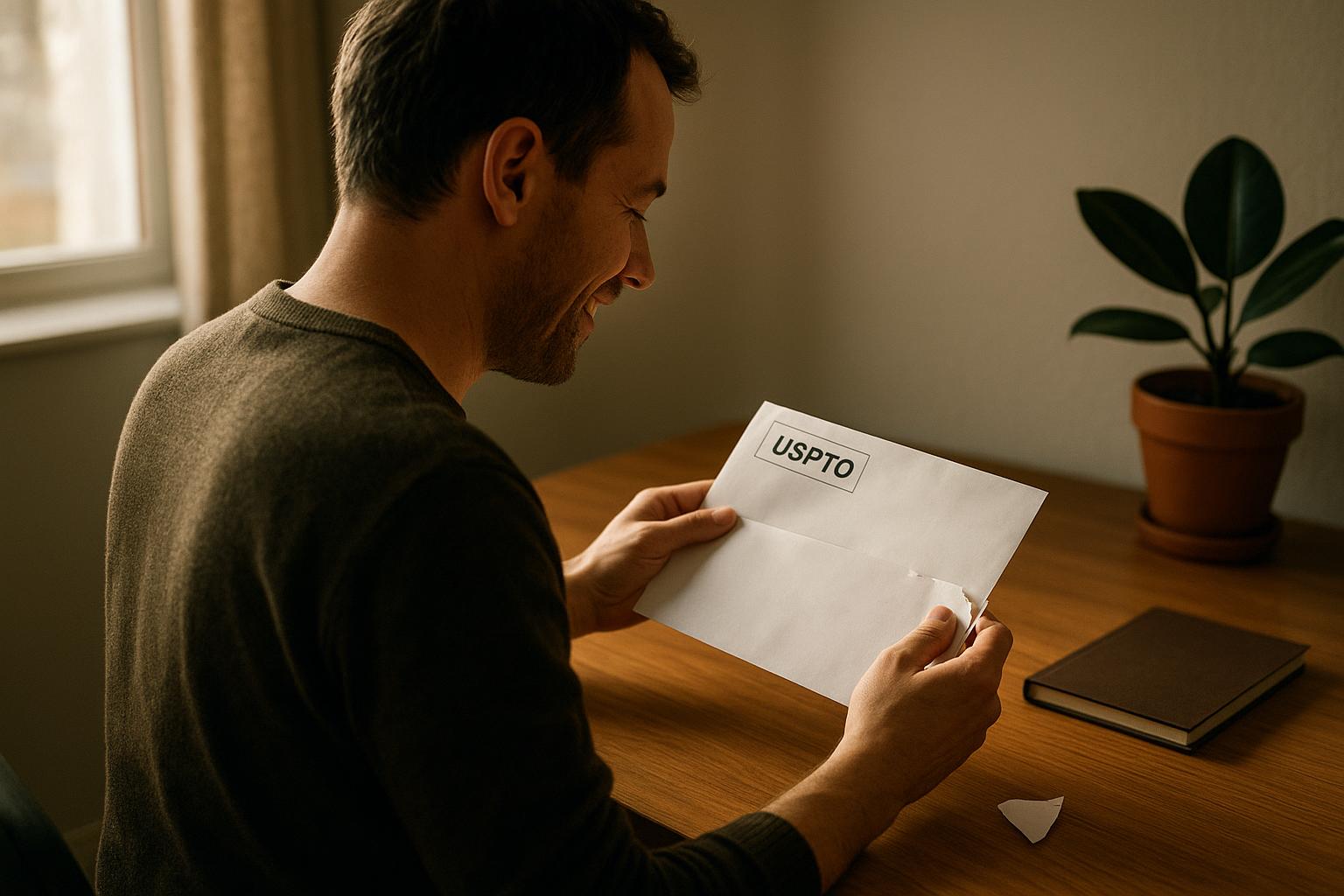
When Your Trademark Clears on the First Try
The email lands without drama. No angry red stamp, no long Office Action, no request to explain why your business name is not confusingly similar to something already on the register. Just a quiet sign that the USPTO examining attorney did not find a blocking issue on first review.
That moment feels small compared with a launch, a first sale, or a funding wire. But it says something important. A trademark application that clears on the first attempt is rarely pure luck. It usually means the naming work upstream was tighter than it felt at the time.
What a first-pass trademark approval really means
First, be precise about the milestone. A USPTO application can be approved for publication, pass through opposition, and eventually register. Depending on where you are in that process, “approved” may not mean the exact same thing. But if your application avoided an initial Office Action, that is still meaningful.
It means the examiner did not immediately see a likelihood of confusion with an existing mark, did not reject the name as merely descriptive, and did not find a basic filing problem serious enough to slow things down. That does not make the name invincible. It does mean the obvious traps were probably avoided.
For a founder, that matters because delay is expensive even when the government fee is not the biggest cost. A trademark objection can stall packaging, website copy, investor materials, hiring pages, app store listings, and sales decks. It can also reopen the naming debate at the worst possible time, after everyone has emotionally moved on.
Your business name probably passed three silent tests
When a name clears cleanly, it often passed three tests before the application was ever filed.
The first test is distinctiveness. A name like “Fast Payroll” for payroll software is easy to understand, but weak from a trademark standpoint. A name that suggests an outcome without naming the category directly has a better shot. Think in terms of angle, not description. “Gusto” does not say payroll. It creates a feeling around work and people operations.
The second test is distance. Your name was likely not sitting too close to another mark in the same or adjacent class. This is where founders get surprised. The USPTO is not only comparing exact matches. Similar sound, similar appearance, similar meaning, and related services can all matter. “Klaro” and “Claro” may feel different in a brainstorm. In a trademark review, they may be uncomfortably close if the services overlap.
The third test is filing accuracy. The goods and services description, owner details, specimen, and filing basis all need to line up. A strong name can still get slowed down by a sloppy application. Clean approval often reflects clean paperwork, not just a clean name.
The best trademark strategy starts before filing
A lot of founders treat trademark screening as the last checkbox after the name has already been chosen. That is backwards. By then, the team has imagined the logo, bought the domain, written the announcement, and maybe told friends or customers. Every warning sign feels like an attack on momentum.
The better approach is to screen names while they are still cheap to abandon. Search the USPTO database for exact matches, near matches, plural forms, phonetic cousins, and marks in related categories. Search Google like a customer, not like a lawyer. Look at LinkedIn, app stores, marketplaces, and industry directories. The legal database does not capture every practical conflict.
This is also where a tool like Namedrop can fit into the early pass, since each generated name comes with domain availability, X and TikTok handle checks, an automatic USPTO conflict status, and a pre-filled EUIPO search link. The useful part is not outsourcing judgment. It is seeing naming risk before attachment hardens.
Domain choices can support or weaken a brand name
A clean trademark path does not automatically mean the domain situation is clean. Plenty of registrable names have miserable domains. The exact .com might be parked for $85,000, used by an unrelated company, or held by someone who will never reply.
That does not always kill the name. Early companies often use modifiers like get, try, join, use, or app. Country-code domains can also work when they fit the market. But the domain should not create confusion with another active business in the same space. If your trademark clears but customers keep landing on a competitor’s site, the legal win will feel hollow.
Be careful with names that only work because of a domain hack or odd spelling. If every sales call starts with “that is with two Ys and no E,” the name may cost more than it saves. Trademark clearance is one filter. Daily usability is another.
A clean brand name still needs active protection
First-pass approval should not make you careless. After registration, the name still needs to be used consistently. Use it as a brand, not as a generic term. Keep records of first use, product pages, packaging, invoices, and ads. Watch for similar names entering the market, especially in your category.
Also remember geography. A USPTO registration helps in the United States. It does not automatically protect the name in the European Union, the United Kingdom, Canada, Australia, or other markets. If international expansion is likely, run those searches early. A name that works in one jurisdiction can hit a wall in another.
What this says about your naming process
If your trademark application went through on the first attempt, take the win, but study the cause. Maybe the name was distinctive without being obscure. Maybe the category language was clear, but not descriptive. Maybe the domain was available because the word was fresh enough. Maybe the search process caught weak options before they reached the final shortlist.
That is the real lesson. Good naming is not about finding a word that everyone loves in the first meeting. It is about reducing future friction while leaving enough room for the brand to grow. A quiet USPTO approval letter is not the loudest milestone in company building, but it is one of the few that tells you an early decision may hold up under pressure.
The name still has to earn meaning through the product, the customer experience, and years of consistent use. But starting with a name that clears the first legal hurdle gives that work a cleaner runway.
Ready to name your business?
10 AI-generated names with domain availability, social handle checks, and USPTO trademark status. One-time $9.
Name my business →